
OSHA 10 and 30 Cards and Forklift Certification: What to Collect
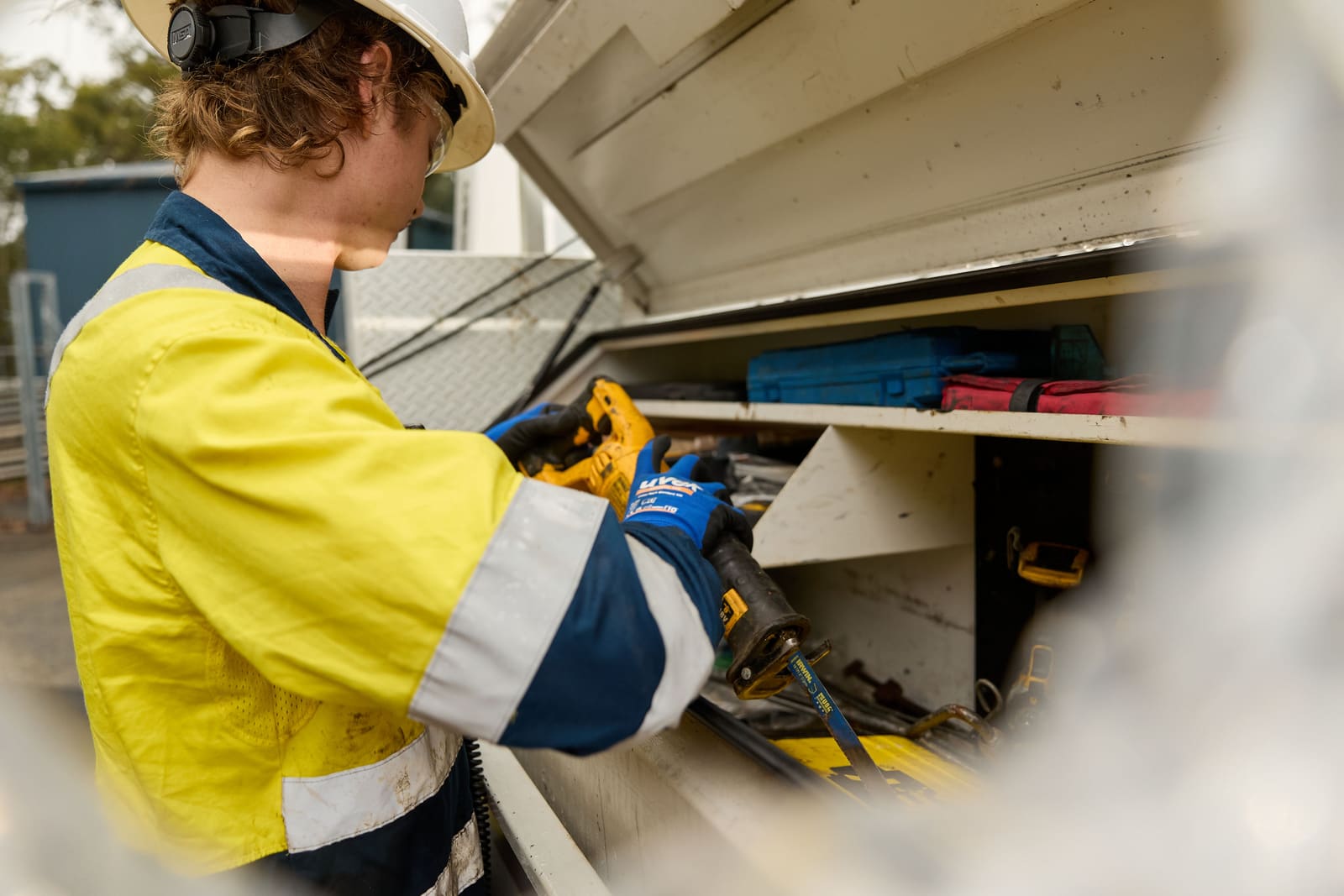
If your staff or subcontractors work on construction sites, in warehouses or around forklifts, two kinds of safety paperwork come up again and again: OSHA 10 and OSHA 30 cards, and forklift operator certification. They are often lumped together, but they work very differently. One is a training card issued by a trainer, sometimes required by state or city law. The other is a record you, the employer, have to create and keep current.
This post covers what each one is, where the rules come from, what to check, and how to set WorkZerk up to collect and track them.
What OSHA 10 and OSHA 30 cards are
The cards come from OSHA's Outreach Training Program. Authorized trainers teach 10-hour and 30-hour classes in construction, general industry, maritime and disaster site work, and each student who finishes gets a completion card.
| Course | Intended for |
|---|---|
| 10-hour | "Primarily intended for entry level workers", as awareness of common job hazards |
| 30-hour | "Workers with some safety responsibility", with more depth and a wider range of topics |
Three points from OSHA's own FAQ are worth knowing before you ask anyone for one:
- It is voluntary at the federal level. "The Outreach Training Program is voluntary and OSHA does not require Outreach training."
- It is not a license. OSHA says "an OSHA card is not considered a certification or license." The card shows someone completed a class. It does not show they are competent to do a particular job.
- The cards don't expire. Construction, general industry and disaster site cards have no expiration date. Maritime cards don't expire either, for training completed on or after April 1, 2019.
OSHA also says that "some states, municipalities, employers, unions, and other organizations have enacted requirements mandating training." That is where expiry and deadlines come in.
Where a card is required, and where it effectively expires
OSHA doesn't list the places that require a card, so check the state or city where the work is. Four well-documented examples:
| Where | Who needs what | Time limits |
|---|---|---|
| New York City | Workers on sites with a Construction Superintendent, Site Safety Coordinator or Site Safety Manager need a Site Safety Training (SST) card: at least 40 hours of training for workers, 62 for supervisors | An SST card is valid for five years. OSHA 10 or 30 from the past five years can earn a temporary card valid for six months |
| Nevada | Construction workers need an OSHA-10 card and supervisors an OSHA-30 card, within 15 days of being hired | An employer must suspend or terminate a worker who has no current, valid card by day 15 |
| Connecticut | Private-sector workers on public works projects need the 10-hour construction course | A card issued more than five years before the project starts doesn't count. A copy goes with the certified payroll |
| Missouri | On-site employees of contractors on public works projects need the 10-hour construction course, within 60 days of starting on the project | The contractor forfeits $2,500 plus $100 per employee for each day someone works without it |
Other states have their own rules, mostly tied to public construction contracts. Check with the state labor department, and with the contract itself, which can ask for more than the law does.
New York City SST cards in more detail
NYC is the strictest of these. Under Local Law 196 of 2017, the Department of Buildings (DOB) sets the hours and the card. Workers who have taken OSHA 30 in the past five years need 10 more hours for a worker card: 8 hours of fall prevention and 2 hours of mental health awareness.
A card can be renewed for up to a year after it expires, but an expired card can't be used on a jobsite during that year. After the year is up, the worker needs a new card.
Anyone can check an SST card with DOB's Training Connect app. There is a live example of why that matters: DOB is invalidating every SST certificate issued by Redcode Inc. after a fraud indictment, with a grace period through December 7, 2026 for affected workers to retrain with a registered provider.
How to check an OSHA card
OSHA does not run a public database of student cards. Its FAQ suggests two checks:
- Scan the QR code on the back of a plastic card. It gives contact details for the OTI Education Center that processed the card.
- Contact the trainer who issued it. Trainers must keep class records for five years.
Look at the card itself as well: the name matches the person, the course is the right one (construction or general industry, 10 or 30 hour), and the date fits any state rule you are working under.
Replacement cards are only available for classes taken in the last five years, and only one per student per class. Someone who has lost an older card may have to retake the course.
Forklift operator certification
Forklifts are "powered industrial trucks" under OSHA's standard 29 CFR 1910.178. Paragraph (l) sets the training rules, and they are not about a card. OSHA's forklift eTool puts it plainly: operators "must be trained and certified by their organizations". There is no OSHA forklift license.
What the standard requires of the employer:
- Train and evaluate before they drive. Training is a combination of formal instruction, practical training and an evaluation of the operator's performance in the workplace (1910.178(l)(2)(ii)). Trainees may only drive under direct supervision, where it endangers no one.
- Certify it in writing. The certification must include the operator's name, the date of training, the date of evaluation, and who did the training or evaluation (1910.178(l)(6)).
- Evaluate again at least every three years (1910.178(l)(4)(iii)).
- Give refresher training sooner when the operator is seen driving unsafely, has an accident or near miss, fails an evaluation, is assigned a different type of truck, or when workplace conditions change in a way that affects safe operation (1910.178(l)(4)(ii)).
A forklift card from a previous job
A wallet card from another employer or a training school doesn't certify anyone for you. OSHA says a new employer must "evaluate the applicability and adequacy of prior training", and "may, but is not required to, use written documentation of the earlier training." Under 1910.178(l)(5), you can skip repeating topics they were already trained in, once you have evaluated them and found them competent on your trucks and your site. The certification is still yours to sign.
Subcontractors on your forklifts
If a subcontractor's or carrier's people drive forklifts at your site, you don't have to train them yourself. OSHA says you must still "ensure that such individuals have been trained". In practice that means asking their employer for its certification for each operator.
One more rule for staff: under federal child labor law, workers under 18 generally may not operate or assist in operating a forklift in non-agricultural jobs.
This is general information, not legal advice. State plans can set their own standards, so check with your state's OSHA office or a lawyer for your situation.
What WorkZerk does with OSHA cards and forklift records
- Each person sends a photo of their card from a private link on their phone, with no account or password.
- Where a card or certification lapses (an NYC SST card, or your three-year forklift evaluation), the person or you enter the date, and WorkZerk's AI check flags an upload whose printed date differs from the date typed.
- You approve each document, and WorkZerk records who approved it and when.
- Documents save to the person's contact record, so they count on every portal that person is on.
- WorkZerk can email people before a dated document expires, and email you as well.
- The Document compliance report shows who is current, expiring, expired or missing, across everyone.
What it does not do: WorkZerk does not check a card with a trainer, an OTI Education Center or NYC's Training Connect app, and it does not train or evaluate forklift operators. It can't tell you whether a card meets a particular contract or state rule. It keeps the copies, the dates and the record of who approved them.
Setting it up in WorkZerk
1. Turn on two-factor authentication
Asking people to upload documents needs two-factor authentication on your account. Set it up under Account, then Two-factor authentication (opens in WorkZerk in a new tab).
2. Create the fields
Open Fields (opens in WorkZerk in a new tab) and add these, choosing Upload as the type:
- OSHA Outreach card. Leave Require an expiry date unticked, because the federal cards don't expire.
- NYC SST card, if you work in New York City. Tick Require an expiry date.
- Forklift operator certification. Tick Require an expiry date, and use the date the next evaluation is due: three years after the last evaluation.
Then add the details you want on the record: an OSHA course Choice field (Construction 10-hour, Construction 30-hour, General industry 10-hour, General industry 30-hour), an OSHA card issue date Date field for state rules like Connecticut's five years, and a Forklift truck types Text field. See custom contact fields.
3. Ask for the card
None of the starter packs asks for an OSHA card or forklift certification, so add them yourself. Open a portal from Portals (opens in WorkZerk in a new tab), or create one such as "Spring 2027 site crew". On its Requests panel, click + Insert, choose Upload, name it "OSHA 10 or 30 card" and pick your OSHA Outreach card field. Describe exactly what to send, for example: "A clear photo of the front and back of your OSHA card."
Add a Fields request for OSHA course and OSHA card issue date, so they are typed in rather than read off a photo. For subcontractors, the Contractor onboarding (United States) starter pack covers the W-9, insurance and bank details. Add it, then insert these requests alongside. See starter request packs.
4. Limit the forklift asks to operators
Put the forklift requests inside a Section and use Show only for specific people, or gate it on a Choice question such as "Will you operate a forklift?". Inside it, add an Upload request for Forklift operator certification with Require expiry on. For a subcontractor, the description can say: "Your employer's signed certification showing your name, the training and evaluation dates, and who trained and evaluated you." See asking for documents and info.
For your own staff, you write the certification. Attach it on their contact record under Forklift operator certification after each evaluation, with the next due date as the expiry.
5. Review and approve
Uploads wait under Needs review on Requests (opens in WorkZerk in a new tab). Check the name, the course and the date, scan the QR code or call the trainer where it matters, then approve. Reject anything that falls short and say why. See reviewing uploads.
6. Switch on the reminders
Open Automations (opens in WorkZerk in a new tab) and switch on Document expiring reminder and Document expired reminder. Both start switched off. The expiring reminder emails the person 30 days before the date. An NYC SST renewal needs refresher training first, so consider a second rule at 60 or 90 days.
A forklift re-evaluation is your job, not the operator's. Build a rule on Document expiring with Send account email, so the reminder reaches you too. It fires for every dated document, so word it to cover any document. See automations.
7. Check who is covered
Open Requests (opens in WorkZerk in a new tab) and click Document compliance. Each person shows as current, expiring, needs review, expired or missing for each document. Tick Only people who aren't compliant for the list to work through, and use Download CSV when a general contractor or an inspector asks for your records. See document compliance.
Getting started
Start a free WorkZerk trial at workzerk.com, then work through the steps above. For the whole subcontractor process end to end, see the contractor compliance walkthrough, or email us at [email protected].